
- A Maritime Industry Career Overview
- How to Get Hired in the Maritime Industry
- How to Work on a Vessel — Different Maritime Career Options
- Types of Vessels in the Maritime Industry
- Benefits and Disadvantages of Working at Sea
- Certification as a Deck Officer
- Charting Your Course to a Stable Future
- Deciding Which Maritime Career to Pursue
- Maritime Industry FAQs
- Maritime Apprenticeship Programs at MITAGS
- What Qualifications Do You Need for a Maritime Apprenticeship?
- Training With Your Potential in Mind
A career in the maritime industry might be for you if you’re interested in the world of ships and boats and prefer to avoid a traditional nine-to-five workplace. It’s an exciting and financially rewarding profession — you’ll travel the world and get paid to be on the water. For example, the average annual pay for marine engineers and naval architects is over $105,000, according to the most recent available data from the United States Bureau of Labor Statistics.
Throughout this detailed guide, we’ll discuss maritime career paths, explain the pros and cons of working at sea and give you insights into marine apprenticeship training programs that can fast-track your introduction to the industry and provide you with the credentials you need to confidently apply for jobs.
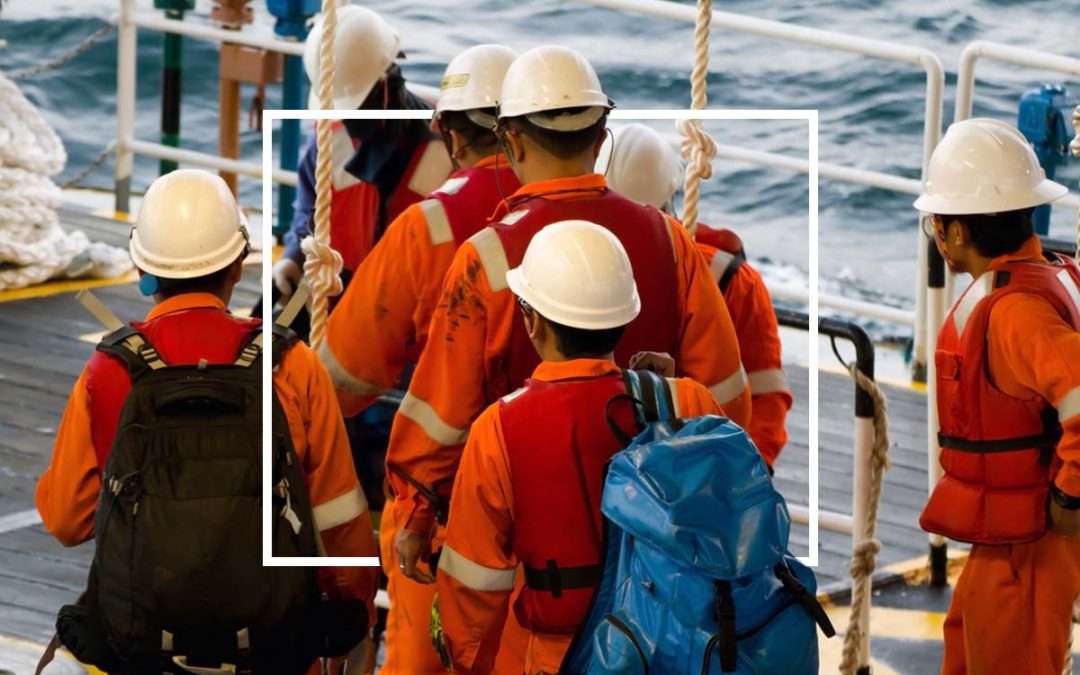
A Maritime Industry Career Overview
A maritime career isn’t for everyone — you must be ambitious, adaptable and willing to work an alternative schedule. But if a job that’s consistently exciting and nontraditional appeals to you, you may opt to join the thousands of professional mariners who love working at sea.
People choose careers in the maritime industry for various reasons, and the sector offers multiple ways to succeed. Jobs range from traditional manual labor to highly skilled, technical positions requiring years of training and expertise.
Many maritime job vacancies offer entry-level positions with lower experience levels required. However, you will need advanced training to work on specific kinds of ships — such as tugboats, oil tankers, research vessels and container ships. Therefore, it is wise to research which maritime education route to take before picking a path.
Additionally, to become a mariner, you must be physically fit for the job and committed to maintaining a safe workplace. To get started, you need to:
- Pass a background check and a medical and physical exam
- Have authorization to work in the United States
- Provide proof of identity
- Consent to and pass regular drug tests
- Obtain a Transportation Worker Identification Card
- Complete required training programs
- Obtain relevant certifications and licenses for your preferred job vacancies
How to Get Hired in the Maritime Industry
You’ve done your homework and decided a career at sea might be for you. Now what? Here’s how people usually break into the maritime industry.
1. Get an Entry-Level Maritime Job
If you’re unsure what you hope to achieve in your maritime career or don’t want to invest time before testing the waters, you may jump into an entry-level position and gradually work your way up from there, completing training and certification programs as you advance.
Finding a maritime job now — whether you wish to work on a tugboat, passenger ship or cargo vessel — is much simpler than it used to be. The increased number of online job boards has made it easier to search and apply.
One of the best ways to find opportunities is to visit a company’s official website and set up a notification. Then, you will get email alerts when the organization posts new jobs.
Often, the job description will list the certificates and experience required and ask you to upload your resume or other relevant documents. When you apply, note the organization’s expected response time.
2. Go to Maritime Training School
If you’re aiming for a full-time career working on large vessels, there’s no better way to break into the industry than by attending a reputable maritime training school such as Maritime Institute of Technology and Graduate Studies (MITAGS). Mariners know and respect the importance of this training — it will give you a significant edge over other applicants who don’t have it.
Programs designed for entry-level students will train you for your shipboard duties, prepare you to earn various certifications and even connect you with employment opportunities. There are different apprenticeship tracks to suit your goals, which we’ll discuss later.
Questions? Contact a school advisor here.
How to Work on a Vessel — Different Maritime Career Options
The maritime industry offers several compelling career choices. And while a ship’s mariners are literally all in the same boat, their day-to-day tasks may differ, ranging from the chief engineer in the engine room to the chief officer on deck. Here are some examples of openings you might find when you review job vacancies.
1. General Crew
General crew members are responsible for the hands-on work that gets done on deck. You will help with tasks like cargo operations, berthing and unberthing, equipment maintenance, vessel maintenance, handling deck machinery and possibly assisting with navigation.
2. Marine Engineer
As a marine engineer, you’re responsible for the more technical and complicated mechanical systems aboard a ship. Many engineers are highly specialized and only work in one area of the vessel, like the engine room or with electronic systems.
3. Deck Officer
Deck officers are responsible for the safe navigation of the vessel, which involves monitoring its position, developing passage plans and avoiding collisions with other vessels.
4. Marine Cook
Everybody loves a good cook. If your passion is the culinary arts and a life at sea sounds exciting to you, you may consider this option. Marine chefs run the ship’s galley and are in charge of ordering and budgeting for supplies.
5. Steward
Stewards are more common on long-haul vessels and in the private yachting world — they are primarily responsible for assisting with daily chores and maintaining tidy living quarters. They clean crew accommodations and occasionally assist the galley staff.
6. Land-Based Maritime Careers
What if you like ships and their operations but don’t want to head for the open seas? Several land-based careers within the maritime industry might be suitable for you.
- Shipbuilding and repair: If you’re interested in the process of building massive ships and what goes into repairing them, this exciting facet of the marine industry might be worth pursuing.
- Port operations: Career opportunities solely within ports can be as dynamic and exciting as working onboard. Ships from far-flung destinations arrive in ports daily, and handling the operations is a massive undertaking. You may work in passenger and cargo unloading, distribution or security. Specific jobs include longshoreman, truck and ship loader, delivery driver, cargo and freight agent, fleet engineer, shipping broker and many more.
7. Crossover Careers
If the maritime industry interests you but you don’t want to spend your working days at a port or at sea, choose a job that relates to the shipping industry without directly being part of it. Career fields like accounting, public relations, marine law and marine biology can be instrumental for shipping companies, yet they don’t involve any of the actual shipping work.
Questions? Contact a school advisor here.
Types of Vessels in the Maritime Industry
In addition to possible roles, you also want to consider different vessels and which ones appeal to you and your existing skill set. These are some of the potential sea vessels you might wish to work aboard when starting your career.
- Container ships: A container vessel is a cargo ship that carries its load in large metal containers.
- Oil tankers: Tankers generally carry large quantities of liquids and gases. For these ships, safety is a significant factor.
- Bulk carriers: The purpose of bulk carriers is to transport unpackaged bulk cargo such as dry cement, grain and coal.
- Passenger ships: These ships carry passengers and minimal cargo. There are many essential jobs, including marine cooks, stewards and general crew.
Benefits and Disadvantages of Working at Sea
Now that you have a better idea of the different types of work in the maritime industry, let’s explore the possible pros and cons of working at sea.
- Good wages: Maritime positions typically pay better than similar work ashore because they require you to spend long periods away from your home and loved ones.
- Savings: Shipboard jobs include room and board. You will likely want to maintain a place to live when you’re not at sea, but the money you can save on other expenses is a huge perk.
- An alternative to college: Many people graduate from four-year colleges burdened with student debt and unsure about how to achieve their dreams. Maritime training courses prepare you for a job and are more affordable than many college tuitions.
- Responsibility: Chief officers and second officers are responsible for mission-critical ship operations like navigation and watchkeeping. Depending on your personality, you may enjoy holding a job that commands respect and involves supervising others.
- Travel: Living aboard a ship means traveling the globe while you work. Some people are natural homebodies and crave routine, but others thrive on freedom and escape. Instead of working at the same desk all year, you’ll have the ocean for an office.
- Career security: The maritime industry will always need crew and captains. You shouldn’t have trouble getting and keeping positions, especially once you have the appropriate training and experience under your belt. According to the U.S. Bureau of Economic Analysis, the marine sector is growing faster than the U.S. economy and will continue expanding in the coming years.
- Long vacations: Many careers at sea require you to be on board for months at a time. But long stretches of time off follow those months — sometimes an equal amount. This schedule is perfect for those who like to complete all their work at once and reap the reward of lengthy vacation time.
- International recognition: The United States is an incredibly respected entity for maritime certifications. An officer’s qualifications derive from international shipping standards and can readily transfer to other maritime jobs worldwide.
Certification as a Deck Officer
If you’ve made it this far in the article, it’s probably safe to assume you’re still interested in what the maritime industry has to offer. This section provides an in-depth look into what it’s like to work toward being a senior member of the deck department and what the different responsibilities mean for your career.
Depending on what type of marine work you want to get into and how long you want to be at sea may help you determine what kind of licensing you’ll strive to acquire. Here are the different types of deck officer licenses and the expected work for each.
1. Deck Officer Limited
If you’d like to work in the marine industry but prefer not to take long-haul trips that last several months at a time, you may opt to work on smaller vessels, often called “workboats.” They include ferryboats, small passenger ships, dredging vessels, research boats and underwater salvage vessels, typically between 500 and 1,600 gross register tonnage (GRT).
For these types of vessels, you’ll need to achieve a certified limited license and work under a senior deck department officer. The “limited” portion of the title refers to the fact that you restrict yourself to smaller vessels and a shorter range of travel — not that a limited license is less valuable.
A limited license may be all you need if you only want to work on smaller, non-shipping vessels. If your certification meets the requirements for a position, marine companies are most interested in the experience you’ve accumulated working similar jobs. Therefore, you could be in higher demand than someone with an unlimited certification if they only have experience working aboard large shipping vessels.
Working aboard different, smaller vessels makes you a well-rounded mariner, which is an attractive quality to workboat employers.
Trips an officer with a limited license would undergo are typically inland and near coastal waters, ranging anywhere from just a day onboard to close to a month for port-to-port journeys. Your crew size is often smaller — usually between four to eight members. Those aboard usually share the duties of cleaning and cooking.
One area where workboat crew tend to gain valuable experience is in rigging. Smaller, more maneuverable vessels often need to rig cargo to tow or transit, and learning how to do this correctly is priceless knowledge.
2. Deck Officer Unlimited
Consider pursuing an unlimited license if you like the idea of working aboard a large container ship. You’ll be responsible for overseeing the safe transit of valuable cargo while protecting the lives of your crew through different oceans and countries across the globe. You’ll share these duties and act as an apprentice to the senior officers aboard your vessel.
- You’ll inspect and maintain lifesaving equipment, including lifeboats and firefighting gear.
- You’ll oversee the deck crew and ensure they correctly use and maintain the deck equipment.
- You’ll stand navigational watch to keep the ship’s course true and safe.
- You’ll work alongside the ship’s helmsman to plot courses, practice collision avoidance and use navigational equipment.
- When you come into port, you’ll oversee the safe unloading and loading of cargo and control ship stability and mooring lines. It’s your job to communicate between the captain and crew.
Like any high-level marine certification, getting your unlimited license is a prestigious achievement. Your experience on long-haul trips and with crew, equipment, cargo management, navigation and watchkeeping will make you a competent and sought-after employee.
According to the compensation data site Salary.com, deck officers’ average salary in 2023 was $101,263. However, there is much room for upward mobility and significant pay increases as you advance. If you wish to continue climbing the ladder, you can use your sea time gained as a second or third officer to move up the ranks and work as a chief officer or captain.
Charting Your Course to a Stable Future
The maritime industry has always relied on teamwork, and that tradition continues today. If you’re excited about pursuing a career at sea, explore the education and training available to help you succeed.
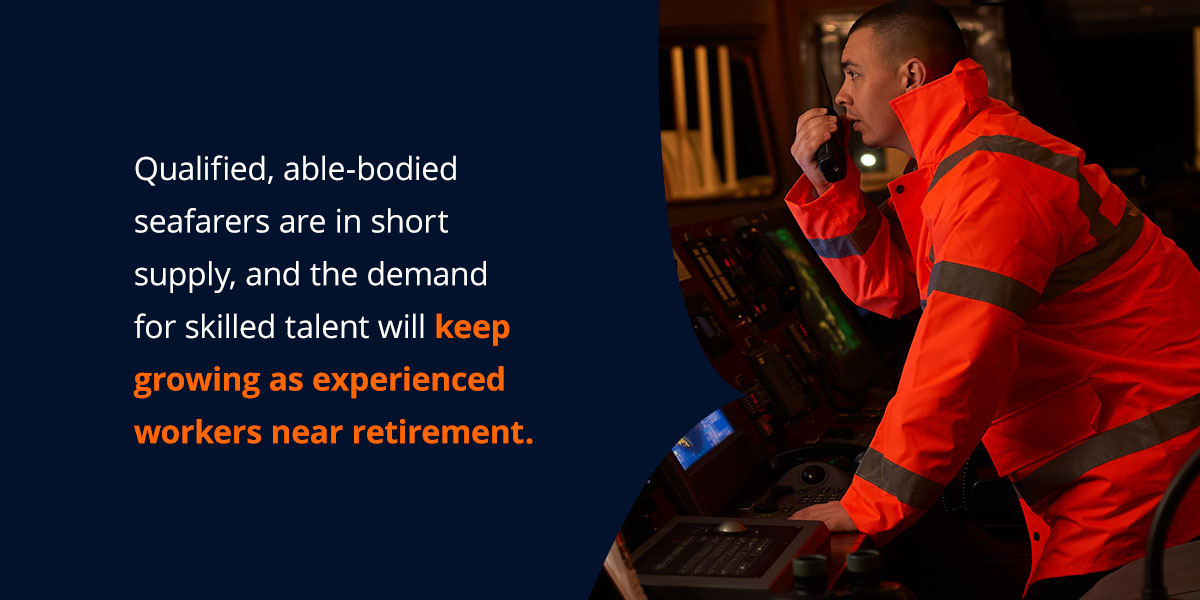
Qualified, able-bodied seafarers are in short supply, and the demand for skilled talent will keep growing as experienced workers near retirement. The Bureau of Labor Statistics reports that employment among workers aged 65 and older has risen by 117% over the past two decades. For motivated young people, this creates a unique opportunity to enter a field with robust prospects and long‑term stability.
A well‑structured apprenticeship or career guide can inspire you to explore your interests and capabilities. Just as importantly, it will outline the expectations and responsibilities you’ll need to meet to build a rewarding future in the maritime industry.
Deciding Which Maritime Career to Pursue
Figuring out what entry-level or more advanced maritime career suits you can be challenging on your own. Thankfully, you can speak to a knowledgeable school advisor at MITAGS to explain the responsibilities and opportunities available aboard the different types of vessels.
Our advisors can suggest work opportunities after meeting with you to discuss your goals and career aspirations.
Do you have questions or concerns about work placement after maritime apprenticeships? Complete our contact form, including your name and email address, and an advisor will contact you shortly.
Maritime Industry FAQs
People considering careers in this industry often have many practical questions. From training requirements and essential skills to lifestyle factors like travel and time at sea, there’s plenty to think about before embarking on this path.
Do I Need a Formal Education to Work at Sea?
Yes. While some entry‑level jobs may not require a college degree, professional maritime training and certification are essential for nearly all maritime jobs, as risk management is nonnegotiable in the industry. International standards set minimum safety, competency and watchkeeping requirements.
What Skills Are Most Valuable for Success in Maritime Jobs?
Success at sea requires a blend of hard and soft skills. Technical knowledge of ship systems, navigation and safety procedures is critical, but employers also look for robust communication, teamwork, problem‑solving and leadership abilities. Emotional intelligence, adaptability and resilience are increasingly valuable when working with multicultural crews and rapidly evolving technology. Physical fitness and safety awareness are paramount, since the work can be demanding and sometimes hazardous.
Will a Job in the Maritime Industry Let Me Travel Internationally?
Since ships transport goods and people through international waters, maritime careers often involve global travel. Seafarers sometimes spend weeks or months abroad, which many people view as a professional perk. Your ability to work internationally depends on the vessel’s flag state and your certifications.
How Do I Start My Maritime Career?
Specialized schools and apprenticeship programs will provide you with the training and hands-on sea time required to qualify for entry‑level positions. Network with industry professionals and explore job boards dedicated to maritime careers to find opportunities while you work on completing your education and earning the necessary certifications.
Maritime Apprenticeship Programs at MITAGS
At MITAGS, we think the best way to learn is by doing. We have designed our apprenticeship model to prepare high-quality mariners with real-world experience to begin careers at sea.
Our course consists of a 28-month, all-inclusive program divided into 26 weeks of classroom training and 360 calendar days of training at sea. People who complete this program will have the necessary knowledge to obtain their limited or unlimited deck rating. You’ll be confident and prepared to take on your responsibilities from the moment you step aboard a merchant vessel.
What Qualifications Do You Need for a Maritime Apprenticeship?
A career in the maritime industry requires candidates to fulfill specific minimum requirements. You must have the following qualifications to be eligible for MITAGS’ Maritime Apprenticeship Programs.
- High school diploma or equivalent: Applicants must have at least a high school education. Provide proof that you have graduated from high school or college or earned your GED. Potential students will also need to take an online math exam.
- Merchant Mariner Credential: Candidates should pass a physical examination, a criminal background check and an approved drug test. You can apply for your MMC online via the National Maritime Center’s official website.
- Transportation Worker Identification Credential: Maritime apprentices at MITAGS will need a valid and up-to-date Transportation Worker Identification Credential.
- Passport: Students applying for maritime apprenticeships should have a valid and current U.S. passport.
- Age: Candidates must be at least 19 years old.

Training With Your Potential in Mind
Do you need help finding maritime work placement opportunities that let you maximize your skills and interests? Let MITAGS help you succeed by guiding you to achievements you never thought you’d be capable of. Our team believes in our apprentices and uses carefully crafted training methods to hone lifelong skills.
We combine our shore-based training with real-world instruction and accurate and advanced simulations that put your learning to use in practical applications. We work with you to gradually and logically build your skills from the ground up as you immediately apply your new knowledge to on-the-job responsibilities.
To learn more about maritime apprenticeships or a career at sea, please don’t hesitate to contact a school advisor today to start turning your dreams into reality.
Related Posts
How to Get Certified As an Able Seaman
What is an able seaman? An able seaman is someone legally certified by the U.S. Coast Guard to perform on-deck duties aboard merchant vessels. This certification is required to crew vessels over 100 gross tons. An able seaman can work in a variety of marine industries and helps with vessel operations, maintenance and safety. If […]
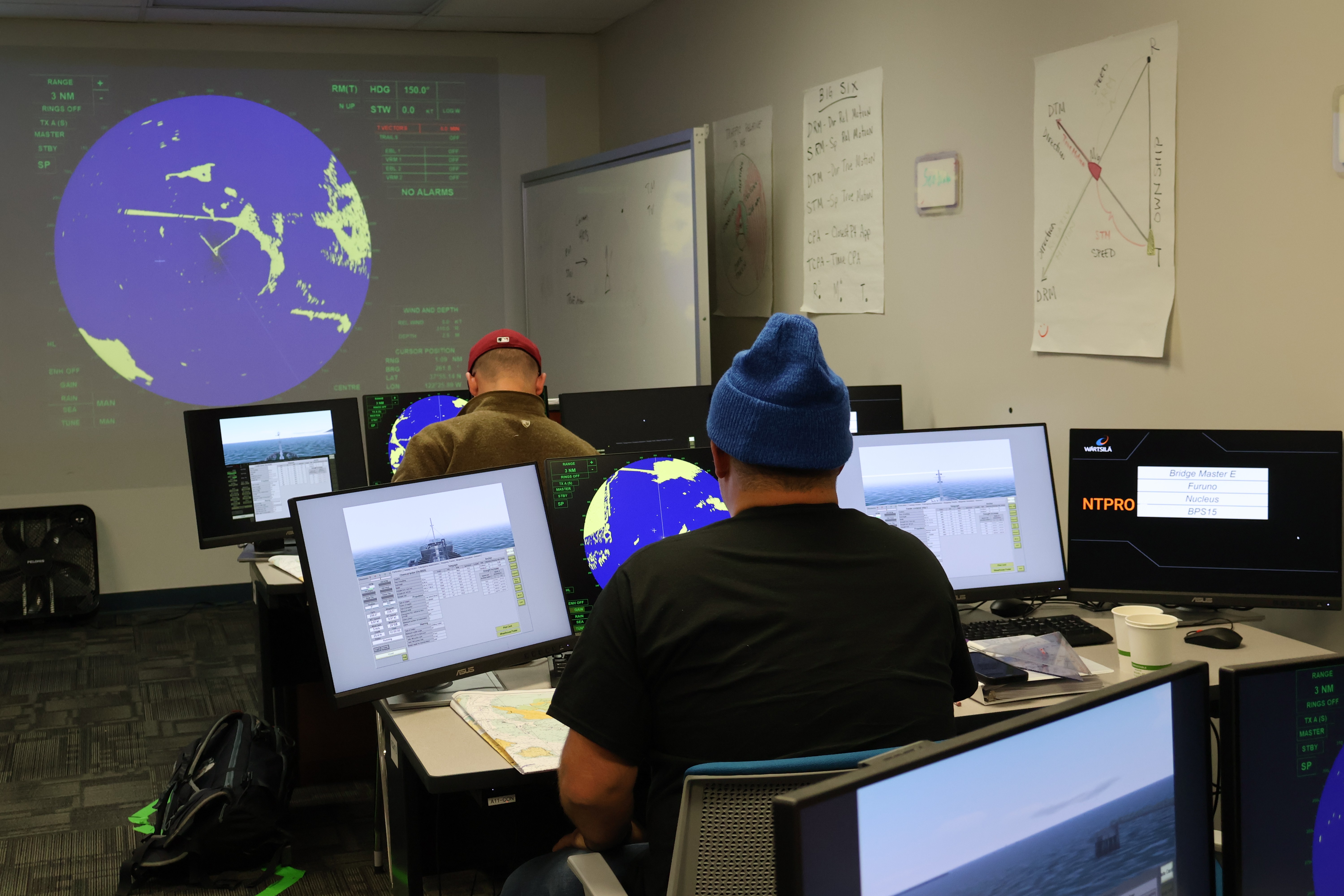
AB to Mate Program at MITAGS: Your Path from Able Seaman to Licensed Mate
Advancing from Able Seaman (AB) to Mate is one of the most important career milestones for professional mariners. The AB to Mate Program at MITAGS (Maritime Institute of Technology and Graduate Studies) is designed to help experienced deck personnel meet STCW-2010 training requirements, qualify for Officer in Charge of a Navigation Watch (OICNW), and move […]

How to Recruit and Retain Seafarers
As in any industry, the recruitment and retention of excellent employees are critical to the success of your business — no matter what the size. Motivated, well-prepared employees are invaluable to your company and critical to long-term success. Throughout this article, we’ll cover everything you’ll want to know about: How to Recruit Maritime Employees Tips […]