Overview of Port Development
What is Port Development?
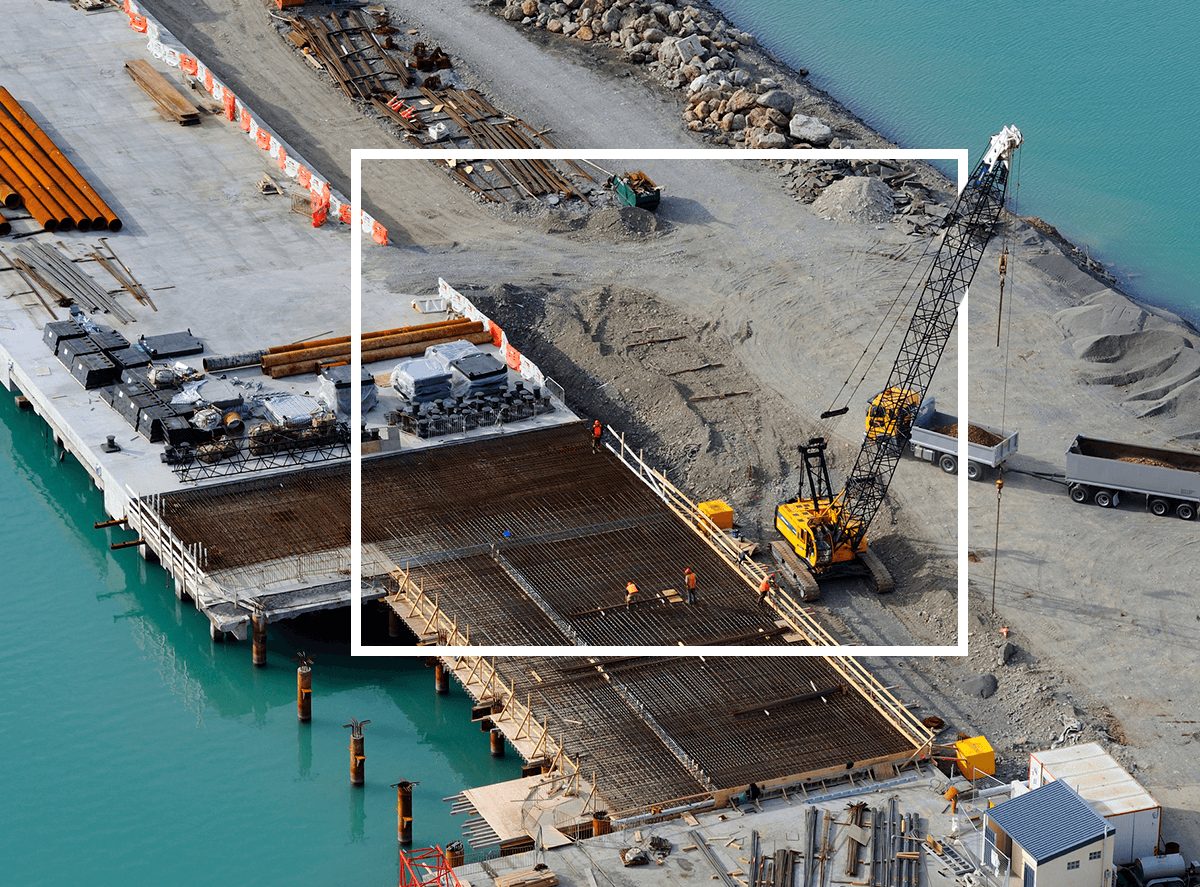
Port development encompasses the planning, design, construction and ongoing improvement of maritime facilities to accommodate the evolving needs of global trade. It involves creating and expanding infrastructure such as berths, cargo handling equipment, storage areas and intermodal connections.
The scope of port development extends beyond physical infrastructure to include technological advancements and operational efficiency improvements.
What are the Phases of Port Development?
Port development is a complex process comprising several phases, each critical to a maritime facility’s successful creation and operation:
- Planning phase: This phase involves comprehensive feasibility studies, market analysis and stakeholder consultations. Planners assess future trade volumes, vessel sizes and cargo types to determine the port’s capacity requirements. They also conduct site assessments and regulatory compliance evaluations to ensure the project’s viability. The planning phase also includes developing master plans outlining the port’s long-term vision and growth strategies.
- Design phase: During the design phase, engineers consider factors such as seismic activity and future expansion possibilities to create detailed blueprints for the port’s infrastructure and facilities. Hydrodynamic modeling is employed to optimize vessel maneuvering and berthing arrangements. The design phase also incorporates technological integration plans, outlining the implementation of automated systems, digital platforms and smart port technologies.
- Construction phase: This phase includes dredging to achieve the required water depth, land reclamation for terminal areas and the construction of quay walls, breakwaters and berths. Construction also encompasses installing cargo handling equipment such as ship-to-shore cranes and developing landside infrastructure, including roads, rail connections and warehouses.
- Operational phase: The operational phase involves implementing port management systems, staff training and establishing operational procedures. Key performance indicators are monitored to assess efficiency and identify areas for enhancement. During the operational phase, technological upgrades, process optimizations and capacity expansions are ongoing to meet evolving market demands and maintain competitiveness in the maritime industry.
Effects of Port Development
Port development generates significant impacts across economic, environmental and social domains.
Economic Impact
Port development creates direct employment opportunities in port operations, cargo handling and maritime services. Indirectly, it stimulates job growth in related sectors such as logistics, manufacturing and trade. Ports enhance regional economic competitiveness by attracting businesses and fostering industrial clusters.
Improved port infrastructure leads to increased trade efficiency, reducing transportation costs and strengthening the competitiveness of exported goods. Additionally, ports generate revenue through various fees, contributing to local and national economies.
Social Impact
Port development can lead to urbanization and demographic changes in port cities. While creating employment opportunities, port development may impact traditional industries and local socioeconomic structures. Ports often engage in community development initiatives, supporting education, health care and cultural programs as part of their corporate social responsibility.
What are the Factors to be Considered While Developing a Port?
Several critical factors must be evaluated in the port development process to ensure long-term success and sustainability.
Location Selection
Selecting an optimal location is paramount in port development. Proximity to major shipping routes reduces vessel deviation times, enhancing the port’s attractiveness to shipping lines. Adequate water depth to accommodate large vessels is essential, potentially reducing the need for extensive dredging. Hinterland connectivity, including road and rail infrastructure, is crucial for efficient cargo distribution. Planners must also consider land availability for future expansion and the potential impact on local communities and ecosystems.
Financial Viability
Rigorous financial analysis is essential for port development. Careful consideration of construction and operational costs with potential revenue opportunities will help determine the port’s economic viability.
Developers must identify diverse funding sources, including public-private partnerships, international development banks and private investors. Long-term economic projections, accounting for trade forecasts and market trends, are crucial in determining the project’s financial sustainability.
Technological Integration
Modern port development requires incorporating advanced technologies to enhance efficiency and competitiveness.
Advanced technologies include automated cargo handling systems, digital port management platforms and smart port technologies. Planners must consider the future integration of Internet of Things (IoT) devices for real-time cargo tracking, artificial intelligence (AI) for predictive maintenance and operational optimization and blockchain for secure and transparent documentation processes.

Role of Operational Research in Port Development
Operational research in port development refers to the application of advanced analytical methods and mathematical modeling techniques to optimize decision-making processes throughout the planning, design and construction phases of port projects. It involves using quantitative analysis, simulation methods and optimization algorithms to inform strategic decisions and enhance the efficiency of port development initiatives.
By leveraging operational research methodologies, port developers can make informed decisions that maximize resource utilization, minimize risks and ensure long-term sustainability of port infrastructure.
Simulation in Operational Research
Simulation-based operational research is particularly crucial in port development. It involves creating virtual models of proposed port facilities and simulating various scenarios to evaluate their performance and identify potential issues before construction begins.
The impact of simulation methods in operational research on port development includes:
- Layout optimization: Simulation models allow developers to test different port layouts and configurations virtually, optimizing berth placements, storage areas and transportation corridors to maximize space utilization and efficiency.
- Capacity planning: By simulating future trade scenarios and vessel traffic, operational research helps accurately determine the required port capacity, ensuring that developed infrastructure can accommodate projected growth without overinvestment or underutilization.
- Risk analysis: Through simulation of extreme events such as natural disasters or significant accidents, operational research aids in identifying potential vulnerabilities, informing the development of more resilient infrastructure and contingency plans.
- Technology integration planning: Simulation models can evaluate the impact of implementing various technologies during development, ensuring seamless integration with physical infrastructure.
- Intermodal connectivity: Simulation-based approaches assist in designing efficient connections between maritime and land-based transportation networks, ensuring the developed port integrates seamlessly with existing logistics infrastructure.
The Future of Port Development With Simulation Research Capabilities From MITAGS
Port development is a multifaceted process that requires careful planning, substantial investment and continuous adaptation to evolving maritime industry needs. Integrating operational research, especially simulation-based approaches, has become vital for optimizing development strategies and enhancing efficiency and sustainability. Simulation provides invaluable insights for layout optimization, capacity planning and risk analysis, enabling data-driven decision-making throughout development.
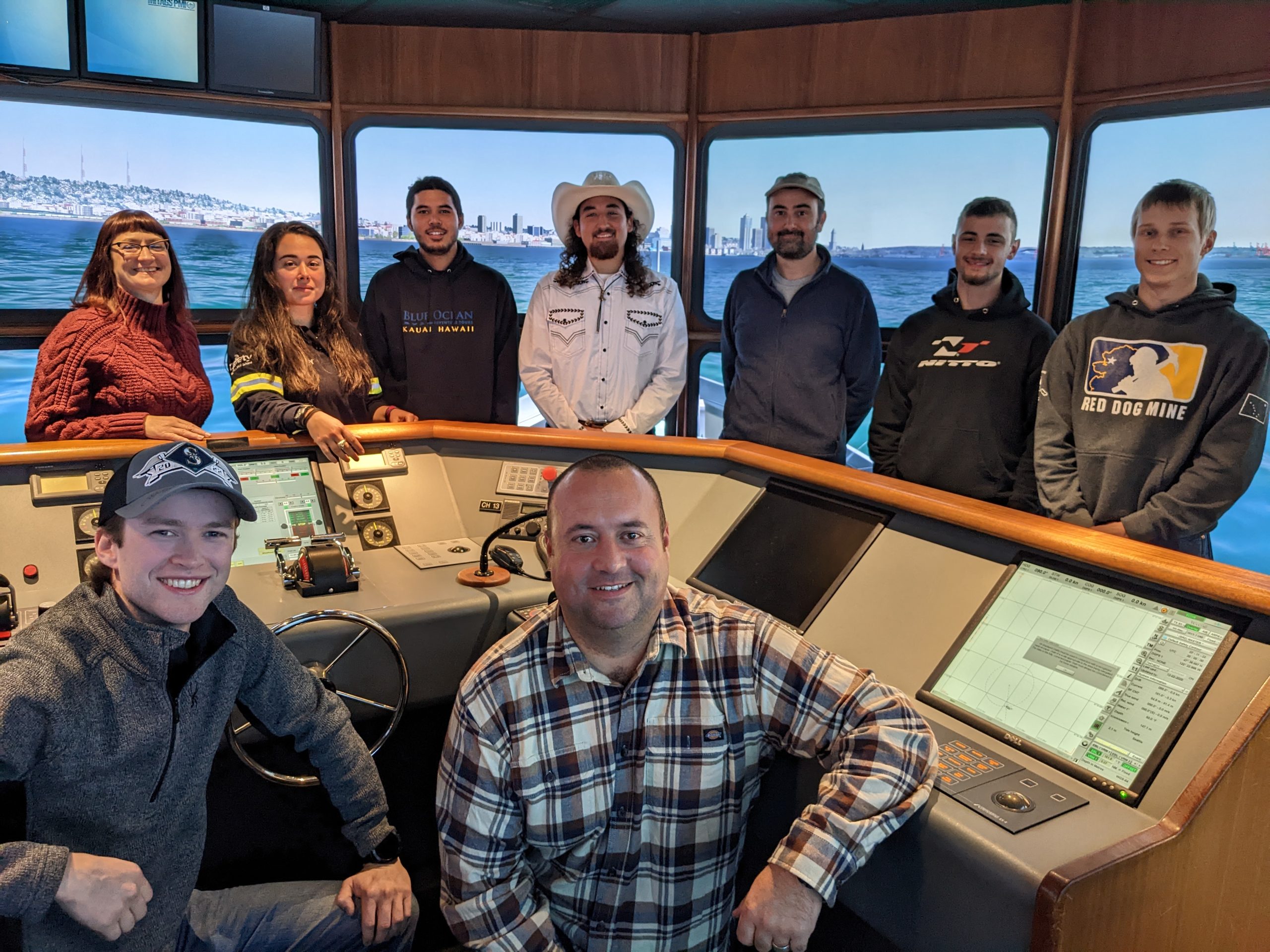
MITAGS offers unparalleled resources to help companies, students and professionals leverage simulation-based operational research in port development. Our advanced maritime navigation simulator training centers in Baltimore and Seattle provide an ideal environment for custom simulation programs and research projects.
Contact us today to learn more about our cutting-edge simulation research capabilities.

Related Posts

Capt. Kjaerulff Presents at NAVTECH 2021
Earlier this month, MITAGS Director of Business Development, Captain Jonathan Kjaerulff presented at NAVTECH 2021. His presentation, titled “Training the Future Mariner,” along with other presentations from the event, can be downloaded by clicking here. Captain Kjaerulff’s presentation focused on navigating the transition with emerging technology in the maritime industry, as we are in the […]

MITAGS recognized as a leader in research simulation
MITAGS’ simulation partner Wärtsila has posted an article on its web site describing the growing role of simulation in port development and ship design. The article highlights MITAGS’ role as not just a pioneer in the use of simulators, but an industry leader in application of new technologies and capabilities. It mentions one notable project […]
MITAGS Celebrates 50 Years
In 2022, MITAGS reached the significant milestone of 50 years in operation as the leading training facility for maritime simulation and mariner license advancement. We took a moment of gratitude to look back at how we have grown as an organization, and we are humbled to think how so many of you have been a […]